July 16th, 2014
[caption id="" align="aligncenter" width="500"] Five Nutrition Tips for Healthy Kids' Smiles[/caption]
If your child could have it his way, chances are he would eat Lucky Charms for breakfast, a peanut butter and fluff sandwich for lunch, and chicken fingers slathered in ketchup for dinner.
Kids will be kids, and maintaining a healthy diet is often the farthest thing from their minds. Do you remember the old saying “an apple a day keeps the doctor away”? Well, that folksy wisdom can be applied to oral health, too. Think of it like this: an apple a day keeps the dentist at bay. Here are five nutrition tips Dr. Allen Job and our team at All Smiles Pediatric Dentistry wanted to pass along that will give your child a healthy, bright smile.
- Eat a well-balanced diet of fruits and vegetables. We weren't joking about the apple. An apple naturally scrubs and cleans your teeth. The nutrients and antioxidants in vegetables are good for the entire body.
- According to the Centers for Disease Control and Prevention, calcium is a mineral needed by the body for healthy bones and teeth, and proper function of the heart, muscles, and nerves. Dairy products like milk, cheese, and yogurt are good sources of calcium. Dark leafy vegetables and calcium-fortified foods like orange juice and tofu are also healthy options.
- Keep snacking to a minimum. Sticky and gummy snacks can increase a child’s risk of tooth decay. Unless a child brushes after every snack (and what child does?), sticky snacks can easily get lodged between the teeth.
- Limit soda intake. Drinking large amounts of soda has been linked to childhood obesity. Soda is loaded with sugars and acids, and these ingredients also damage the teeth. Soft drinks have long been one of the most prominent sources of tooth decay. Have your child drink water throughout the day or juice that’s low in sugar concentrate.
- Chew sugarless gum. After all those fruits and vegetables, sooner or later your child is going to want a treat. Chewing gum stimulates saliva, which in turn helps keep teeth clean and bacteria-free. Sugarless gum contains xylitol. The combination of excess saliva and xylitol reduces plaque, fights cavities, and prevents the growth of oral bacteria.
For more information on keeping your child’s smile looking its very best, or to schedule an appointment with Dr. Allen Job, please give us a call at our convenient San Diego, CA office!
July 9th, 2014
[caption id="" align="aligncenter" width="500"]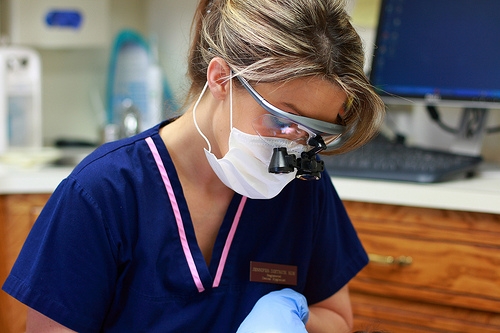 The Safety of Dental X-Rays[/caption]
An article was released to the public stating that dental X-rays contribute to a type of brain cancer. After reading an article like this, your first thought may be to avoid dental X-rays, but you may want to hold off on that quick judgment. As with any treatment we offer at All Smiles Pediatric Dentistry, education is your most valuable tool in deciding what is best for you.
How often dental X-rays are taken is based on risk for infection, physical symptoms, and clinical findings. The American Dental Association (ADA) is a governing body over the dental profession. The ADA states, “ . . . healthy adults receive routine mouth X-rays every two to three years. Dental X-rays are recommended every one to two years for children and every 1.5 to three years for teens. Children often require more X-rays than adults because of their developing teeth and jaws and increased likelihood for cavities.”
A "caries risk category" often determines how often dental X-rays are taken. The most recent documented resource to determine a caries risk is Caries Management by Risk Assessment (CAMBRA). This was adopted by the ADA and is used by dental professionals giving interval recommendations for X-rays.
With knowledge of your risk for dental infection, you will be informed by Dr. Allen Job of the interval at which dental X-rays should be taken. You can rest assured that the standards published by the ADA have been researched extensively and are there to protect your personal health and safety.
Dental X-rays are most commonly digital, which significantly reduces exposure. There is more radiation exposure from the sun or in an airplane than in a dental X-ray. It is common practice to use a lead apron with a thyroid collar for protection during X-ray exposure.
Having a cavity means having an active, potentially harmful infection. Diagnosing such infection with minimal exposure through digital dental X-rays at our San Diego, CA office does more good than harm.
July 2nd, 2014
[caption id="" align="aligncenter" width="333"] Happy Fourth of July![/caption]
Happy Independence Day from Dr. Allen Job and team! The Fourth of July celebrations in America may have changed a lot over the years, but there is no doubt that we Americans love to celebrate the anniversary of our country's independence! Today we're devoting the All Smiles Pediatric Dentistry blog to some fun facts about the Fourth!
- My, how we have grown! This year the United States Census Bureau estimates that our country has 313.9 million residents celebrating the Fourth of July this year, but back in 1776 there were just 2.5 million members of the country.
- Our country loves to show how proud that we are of our independence. Did you know that there are 31 United States places with the word “Liberty” in their names? The state of Iowa actually has four towns with the word Liberty in the name: Libertyville, New Liberty, North Liberty, and West Liberty.
- The United States loves Fourth of July food! It is expected that around 150 million hot dogs are eaten on the Fourth each year. One of the Fourth's most popular sides, potato salad, goes just perfectly with the hotdogs and hamburgers that are standard Fourth of July fare. Some people choose potato chips instead, but we wouldn't have such a plethora of potatoes if not for the prodigious production of the states of Idaho and Washington -- they provide about half of all the potatoes in the United States today!
- Americans love celebrating the Fourth outdoors: About 74 million Americans fire up their BBQ grill every Fourth of July.
- The Chinese contribution: Did you know that Americans have spent more than $211 million on fireworks that were imported from China?
No matter how your family chooses to celebrate the Fourth, stay safe, take precautions, and don't forget to brush after your fabulous Fourth feast!
June 25th, 2014
[caption id="" align="alignnone" width="207"] How Our Office Makes Your Child’s Visit Anxiety-Free[/caption]
Dr. Allen Job and our team at All Smiles Pediatric Dentistry specialize in pediatric dentistry, and we understand that children can be frightened of things they do not understand. This anxiety is often heightened by an unpleasant dental experience or stories they hear from classmates. We have many methods at our San Diego, CA office to make your child’s dental visit pleasant and anxiety-free.
Listening
The first thing Dr. Allen Job and our team do is talk to your child, listen to any concerns he or she may have, and take the time to explain the dental work that will be done. Often children will lose their fears by simply understanding what is happening and why. In addition, you are welcome to be in the room with your child during exams and treatments. When a child is able to see that the parent is relaxed, this is more conducive to the child’s relaxation.
Relaxation
When you arrive at All Smiles Pediatric Dentistry, let your child to play with the toys we provide. This starts the visit in a positive manner. Taking your child’s mind off the exam is useful. While your child is undergoing an examination or procedure, listening to music or watching a video can support a sense of relaxation. When children understand that we care, their anxiety levels are reduced.
Sedation
Nitrous oxide is a sedation technique commonly used to reduce anxiety and alleviate any pain. It is beneficial partly because the effects wear off quickly. Topical pain relievers can also be useful for children with sensitive teeth, and this will eliminate discomfort.
Deeper sedation is useful for complex dental issues, extreme anxiety, or a fear of needles. A liquid or tablet sedative can be given before your child’s appointment. This type of sedation is also helpful for children with a fear of the masks used for nitrous oxide.
We welcome you and your child to discuss any concerns that you have regarding his or her dental appointment. We want your child to be free from anxiety about visiting Dr. Allen Job. The earlier your child’s fears are addressed, the less likely the fear will carry into adulthood.

 Five Nutrition Tips for Healthy Kids' Smiles[/caption]
 The Safety of Dental X-Rays[/caption]
 Happy Fourth of July![/caption]
 How Our Office Makes Your Child’s Visit Anxiety-Free[/caption]